

Every April, something predictable happens in the poetry world. Thousands of people (experienced, beginners, teachers, students) commit to giving poetry more attention. Some decide to write a poem every day for thirty days. Others organize readings, share poems online, or simply read more poetry than usual. This is National Poetry Month, and the daily writing version called NaPoWriMo (National Poetry Writing Month) has become its most visible challenge.
The two are connected but distinct. National Poetry Month is an official celebration launched by the Academy of American Poets. NaPoWriMo is a grassroots daily-writing project that grew up alongside it and eventually went global. Together they turn April into a focused month for poetry, but they started from different places and serve slightly different purposes.

What is National Poetry Month?
National Poetry Month was created in 1996 by the Academy of American Poets. The idea came from a 1995 meeting where the Academy brought together publishers, booksellers, librarians, literary organizations, poets, and teachers. They wanted to discuss ways to increase public awareness and appreciation of poetry in the United States.
The model was clear: it drew inspiration from established observances like Black History Month in February and Women’s History Month in March. Those months had shown how a designated period could highlight a cultural area, bring people together, and encourage participation across groups.
April was chosen after coordination with the same partners (poets, booksellers, librarians, teachers) who agreed it allowed the highest level of involvement. It sits at a transitional point in the year – spring in full movement, the academic calendar still active, literary programming easier to coordinate. The idea was to create a concentrated window where poetry could feel visible and accessible.
The first National Poetry Month took place in April 1996.
From the start, the goal was straightforward: remind the public that poets play an important role in culture and that poetry matters. The Academy positioned it as a way to celebrate poetry’s place in American life, not just as art but as something accessible and relevant.
Over time, it grew. In 1998, the Academy partnered with the American Poetry & Literacy Project to distribute 100,000 free books of poetry across the country during the month. Schools, libraries, and bookstores began hosting events not just across the U.S., but across the world.. Publishers timed poetry releases for April. Today, it’s described as the largest literary celebration in the world.
The Academy supports it each year with resources like posters, reading lists, event ideas, prompts, and partnerships. They emphasize participation at any level. The structure is intentionally flexible. Over the years, common ways to participate have included:
- Daily poem features shared by organizations and publications
- Public readings and virtual events
- Educational programming in schools and universities
- Social media campaigns centered on poetry prompts and excerpts
But as the month gained traction, something else started happening alongside it.

The emergence of NaPoWriMo
While National Poetry Month focuses on celebration and visibility, National Poetry Writing Month (NaPoWriMo) zeroes in on the act of writing. It started in 2003 when poet Maureen Thorson decided to write a poem every day during April and post them on her blog (which is still active at this link).
The direct inspiration was National Novel Writing Month (NaNoWriMo), which had launched in 1999 as a challenge to write 50,000 words in November. Thorson adapted the structure for poetry: one poem a day for thirty days, no word count pressure, just the commitment to show up daily.
At first, it was small. Thorson wrote and shared her own poems. A few others joined in, posting their daily work online. By 2006 or so, the community had grown enough that she launched napowrimo.net as a central hub. The site offered daily prompts, featured participant poems, and created a comment section where people could link their work and respond to each other.
That simple setup allowed writers to follow along without feeling isolated. The prompts gave structure when inspiration ran dry. The comments built accountability and encouragement.
Around the same time, similar initiatives (like Robert Brewer’s “Poem-A-Day” challenge) began circulating, reinforcing the idea that April could be a month of consistent poetic practice.
Over the years, NaPoWriMo evolved. It became international, often called GloPoWriMo (Global Poetry Writing Month) to reflect participants from outside the U.S. The site now includes art galleries, resource links, and featured participants each day. Thousands take part annually, many returning year after year.
Today, it’s less of a centralized event and more of a shared understanding. You’ll find writers participating in different ways:
- Posting daily poems online
- Writing privately but following the same rhythm
- Using prompts loosely or ignoring them altogether
- Joining small accountability groups
The challenge remains the same: write thirty poems in thirty days. The focus is on quantity over perfection. The daily practice builds habits, forces experimentation, and often produces material you can revise later.

The Relationship between National Poetry Month and NaPoWriMo
Although they developed differently, National Poetry Month and NaPoWriMo now function in parallel.
National Poetry Month provides the context:
- Visibility
- Institutional support
- Public engagement with poetry
NaPoWriMo provides the practice:
- Daily writing
- Personal discipline
- Creative risk-taking
One invites you to pay attention. The other asks you to participate.
Together, they turn April into a cycle that many writers return to whether or not they consider themselves poets year-round.
Why writers still show up
Trends come and go in writing communities. Challenges lose momentum. Platforms shift. And yet, NaPoWriMo persists.
Both National Poetry Month and NaPoWriMo endure because they address real needs in different ways.
For many, the official month provides visibility and legitimacy. Poetry can feel marginal in everyday culture. Bookstores shelve it in small sections and readings draw modest crowds. April counters that by putting poetry front and center. Schools teach more poems, libraries display collections, media run features. If you’re a poet who wants to feel part of something larger, the month delivers that sense of occasion.
NaPoWriMo appeals to the solitary side of writing. Poetry often happens alone, at odd hours, with no deadline. The challenge imposes structure: thirty days, one poem per day. It removes the excuse of waiting for inspiration. You learn to generate ideas under pressure, try forms you might avoid, and accept imperfect drafts. Many participants say the streak becomes its own motivation. Finishing the month feels like proof you can sustain a writing habit.
It reintroduces play into writing
Much of writing (especially for those working toward publication) becomes outcome-focused. You think about audience, structure, marketability, revision.
A daily poetry challenge disrupts that mindset. It asks you to:
- Write quickly
- Follow instinct instead of strategy
- Let a piece exist without fully resolving it
The change can feel unfamiliar, even uncomfortable. But it’s also what draws people back.
It makes progress visible
Thirty poems, even imperfect ones, create a tangible record of effort. At the end of April, you have something you didn’t have before:
- A collection of drafts
- A record of ideas
- A clearer sense of your patterns
Not every poem will matter. Some might feel unusable. But the accumulation itself is meaningful.
It normalizes inconsistency
Daily writing reveals something that longer projects often hide: inconsistency is part of the process.
Some days feel productive. Others don’t.
NaPoWriMo makes that fluctuation visible. Instead of interpreting it as failure, you start to see it as rhythm.
The community aspect helps too. Even if you’re writing alone, you know others are doing the same. Comments, shares, and featured posts create connection without requiring in-person events. For beginners, it provides low-stakes entry: no workshop pressure, just daily effort. For experienced writers, it’s a reset back to basics.
April timing works in its favor. Spring arrives in the Northern Hemisphere; the longer days and renewal vibe align with starting something new. The month is short enough to feel doable but long enough to build momentum.
You don’t need a specific skill level, a public platform, or even a long-term commitment. You only need the willingness to try, knowing that the result may be uneven.
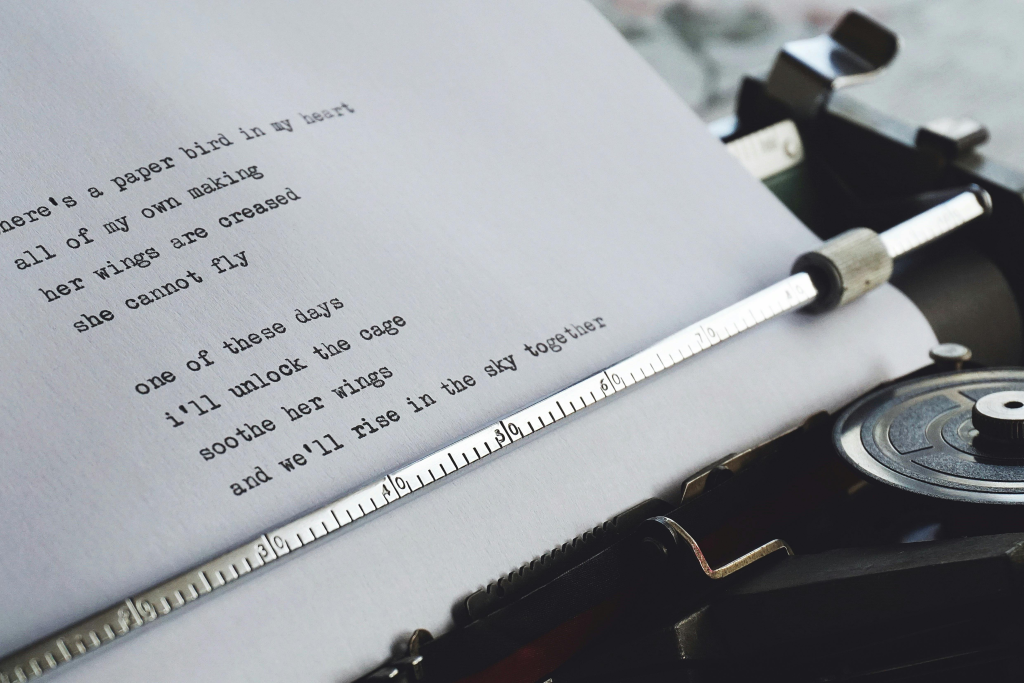
What you can do this April
If you’re thinking about participating, start simple.
- Read the Academy of American Poets site for events, reading lists, and ways to get involved.
- Visit napowrimo.net for daily prompts if you want to write a poem a day.
- Set your own goal: one poem every few days, or just read one poem daily.
- Share if you want (online at Next Chapters or with a friend) or keep it private.
- Use the month to revisit old work, try a new form, or explore poets you haven’t read.
National Poetry Month and NaPoWriMo are all about making poetry a regular part of life for thirty days. To people a reason to engage when they might not otherwise. April ends, but the poems, habits, and connections often don’t. That’s why writers keep showing up, year after year.