

Urban fantasy works because it puts pressure on the boundary between old and new. Magic moves through subway tunnels. Spirits linger in abandoned buildings. Ancient rules collide with modern systems.
Irish folklore fits naturally into that kind of story. It already treats the world as layered. The Otherworld is nearby. Hills, rivers, crossroads, and ruins matter. The supernatural isn’t sealed off; it overlaps with everyday life.
The problem is that Irish folklore is often simplified in popular culture, especially around St. Patrick’s Day. Leprechauns, luck, and green aesthetics take over. But the underlying mythology offers far more than seasonal decoration. It offers stories about boundaries, bargains, land, memory, and consequences. All themes that urban fantasy handles well when given room.
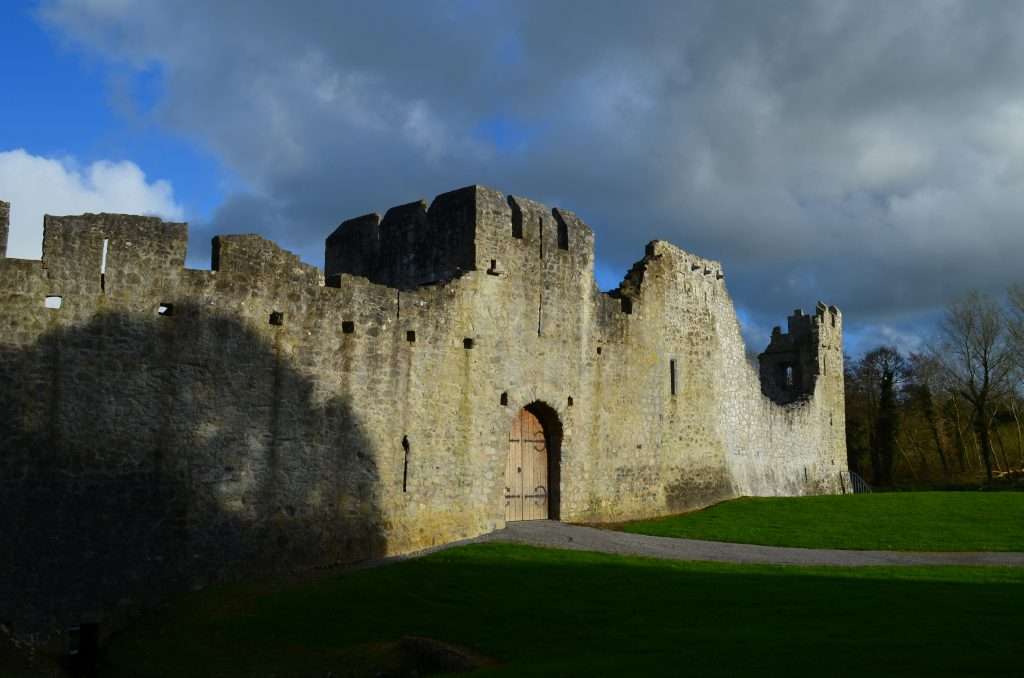
The challenge, especially for writers working outside Irish culture, is knowing how to use these myths without turning them into aesthetic shorthand.
Why Irish folklore fits into urban settings
Irish mythology doesn’t separate the magical from the mundane as cleanly as some traditions do. The Otherworld exists alongside the human one, often overlapping it. One important factor is that it’s concerned with place. Certain locations carry meaning. Certain paths should not be disturbed. Certain boundaries should not be crossed.
Cities are full of boundaries.
They have so many thresholds – subway entrances, alleyways, old buildings repurposed again and again. An old burial site beneath a parking garage. A river forced into concrete channels. These are modern equivalents of fairy mounds and sacred spaces. You don’t need to invent elaborate portals when the tension between land and construction already exists.
This makes Irish myth particularly useful for stories where magic isn’t hidden so much as ignored. It’s there. People just don’t know how to see it anymore.
If you’re new to this, start small and local
When you first start working with folklore in fiction, it’s tempting to include everything. Multiple mythic beings. Complex backstories. A full supernatural hierarchy. But you need to go slower.
Start with one mythic element and build outward from there.
Maybe there’s a single sidhe mound hidden in a public park. Maybe a river spirit has adapted to decades of pollution and now behaves differently than it once did. Maybe a fairy path still exists, but a city bus unknowingly crosses it every day.
By narrowing your focus, you make the folklore feel like it belongs in the setting, not like it was dropped in for flavor.
It also forces you to ask practical questions. How does this being survive in a city? Who believes in it? Who ignores it? What changes, and what refuses to? To really bring your world to life, you have to be willing to explore the consequences of things simply existing.
Choose myths that match the tone of your story
Irish folklore is not automatically lighthearted. Many stories involve strict rules, dangerous bargains, and long memories. When choosing which elements to include, think about the kind of story you’re telling.
If your story leans toward mystery, look at myths involving bargains, hidden consequences, shapeshifting identities, and tests of character. If it leans toward horror, focus on stories where boundaries are violated and the cost is permanent. If it leans toward quieter magic, consider folklore rooted in land, ancestry, or inherited obligation.
You don’t need the most famous or even most familiar myths. Matching the tone to your theme is more important.
Let the modern world change the myth
One mistake in urban fantasy is treating the city as a backdrop instead of an active force. If you’re bringing Irish myth into a modern setting, the environment should affect it.
Ask how mythic beings adapt to cities: What happens to land-bound spirits when land is scarce? How do ancient agreements survive urban development (zoning laws, surveillance, etc.)? Do old rules still apply when property lines shift and buildings rise?
Maybe magic adapts. Maybe it weakens. Maybe it becomes more dangerous because it’s compressed.
The city shouldn’t just host the myth. It should challenge it, create friction, which will then help you build your plot.
Moving beyond surface-level representation
If you’re writing outside Irish culture, this is where the work becomes more layered. Using Irish folklore comes with cultural responsibility.
Irish mythology has a complicated history. It has survived colonization, language suppression, and long periods of cultural erasure. At the same time, it has been romanticized and commercialized in global media. Urban fantasy can unintentionally repeat those patterns by treating folklore as an atmosphere (something that makes a setting feel mystical without acknowledging its origins) rather than a living tradition shaped by history.

To write with it, you should understand what you’re engaging with.
Understanding the difference between inspiration and appropriation
Cultural appropriation in fiction isn’t about using myths at all. It’s about how and why they’re used.
Problems arise when folklore is stripped of context and reduced to stereotypes, and again when sacred or culturally specific elements are used purely for spectacle
One common issue in fantasy writing is blending Irish, Scottish, Welsh, and broader “Celtic” elements without distinction. While these traditions share roots, they are not interchangeable.
If you’re using Irish folklore, be specific. Know which tradition your myth comes from. Avoid vague references to “Celtic magic” that flatten distinct cultures into a single aesthetic.
Research beyond simplified retellings
Many accessible versions of Irish myths are filtered through Victorian retellings or modern adaptations that reshape the stories for broad audiences. These versions can be useful starting points, but they shouldn’t be the endpoint.
Whenever possible, look for sources rooted in Irish scholarship, translation work, or modern Irish commentary on folklore. Read multiple versions of the same myth. Pay attention to how stories shift depending on region and era. Notice which elements are debated rather than fixed.
This deeper research doesn’t restrict creativity, because you’re not aiming for academic perfection. You’re forming an awareness. The deeper your understanding, the more confidently you can adapt.
Hybridizing myths with intention
Urban fantasy often mixes myth systems, modern technology, and contemporary themes. This is great or myths, because they evolve faster when placed in new contexts. However, the key is being clear about what you’re changing and why.
If you’re altering a traditional figure, know what you’re changing. Are you shifting their motivations? Their power? Their relationship to land or community? Make those choices deliberate. The story should acknowledge the change instead of pretending it’s seamless.
Sometimes the tension between old rules and modern reinterpretation can become part of the story. Characters may disagree about what the old rules “really” say. They may argue over whether traditions still apply in a changed world.
This approach avoids treating folklore as static. It recognizes myth as something that survives because it adapts, not because it stays pure
Anchor the cultural experience in human relationships
Characters with personal, familial, or regional relationships to the myths can complicate how magic appears in the story. So, how do people in your story relate to these myths? Are they protective of them? Skeptical? Indifferent? Do they see them as heritage, superstition, or something in between?
These characters don’t need to act as cultural mouthpieces. Their understanding can be partial, conflicted, or evolving. What matters is that folklore feels like it belongs to people, not just the plot.
Urban fantasy usually tries to turn myths into history lessons. But letting cultural knowledge live in character choices and behavior makes it feel like more than background context.
Avoid the “St. Patrick’s Day Effect”
Seasonal framing – like when St. Patrick’s day brings visibility to Irish culture – can unintentionally push folklore toward novelty. Leprechauns, rainbows, and green aesthetics appear, but that’s about it. It’s a small slice of life, which usually gets exaggerated.

Urban fantasy doesn’t have to reject celebration, but it should move past it. St. Patrick’s Day can exist in the world of the story without being the story itself. The myths deserve space beyond a single cultural moment.
Ask what exists beyond the familiar symbols. Ask what stories don’t get highlighted. Ask how those deeper threads might intersect with the contemporary issues your urban setting already contains (gentrification, displacement, environmental damage, cultural identity).
Old stories, new streets
At its best, urban fantasy shows that old stories don’t disappear. They shift. They adapt. They survive in new forms. Irish folklore, with its focus on land, obligation, and consequence, offers strong foundations for that kind of storytelling. But the strength comes from engagement, not decoration.
Readers can tell when folklore is treated as a shortcut. They can also tell when it’s treated as a conversation.
Whether you’re experimenting with entry-level worldbuilding or navigating the complexities of cultural hybridization, the guiding question stays the same: what does this myth gain by being here, now, in this city?
If you approach the myths with curiosity, specificity, and care, they can deepen your setting instead of simply coloring it.