


Have you ever stared at a blank page, feeling like your first draft has to be some kind of literary masterpiece? Spoiler alert: it doesn’t.
First drafts are messy, awkward, and sometimes a complete trainwreck. And that’s exactly how they’re supposed to be. Whether you’re dreaming up a novel or a short story (or even a blog post), your first draft is just you tossing ideas onto the page. To become a better writer, you have to learn to embrace that chaos.
Why first drafts are never perfect
Think of your first draft as a sandbox. It’s where you play, experiment, and make a mess. You’re not carving a statue of marble. You’re dumping a pile of clay that you can shape later into something beautiful.
Even the biggest pros start with drafts that are rough around the edges. The goal is simply to get those ideas out of your head and onto the page, no matter how sloppy it looks (or feels).
Here’s what you’ll probably see in your first draft:
- Plot holes that could swallow a spaceship. Maybe your hero’s name flips from Jake to Jack, or you forget about a subplot involving a mystery letter.
- Clunky sentences. Think awkward phrases, overusing “like” or “literally,” or dialogue that sounds like it’s from a bad soap opera.
- Missing pieces. You might skip a scene with a note like “[insert epic chase scene here]” because you’re not sure what happens yet.
- Weird side quests. Your story might veer into a random tangent about a haunted toaster that has nothing to do with anything.
If your draft looks like this, congrats: you’re on the right track.
What famous authors’ first drafts looked like
Think your messy draft is a problem? It’s not. Even bestselling authors start with a jumble of ideas. Here’s proof:
Ernest Hemingway

Draft of the first page of Farewell to Arms, in Hemingway’s handwriting
The guy who wrote A Farewell to Arms wasn’t afraid to call his first drafts “shit.” His early pages were stuffed with over-the-top drama and loose ends. He even tried 47 different endings before landing on the one that worked. Picture him scribbling furiously, crossing stuff out, and probably grumbling to himself.
J.K. Rowling
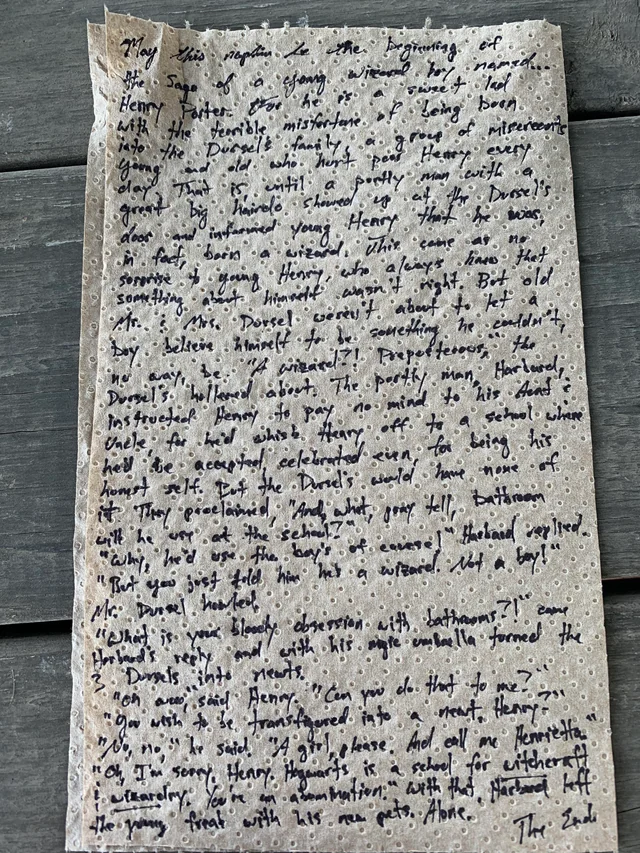
Her handwritten Harry Potter drafts are huge mess – crossed-out words, doodles in the margins, and characters whomever made the final cut. Early Hogwarts scenes? Early versions of Hogwarts had entirely different scenes that got axed or rewritten.
F. Scott Fitzgerald
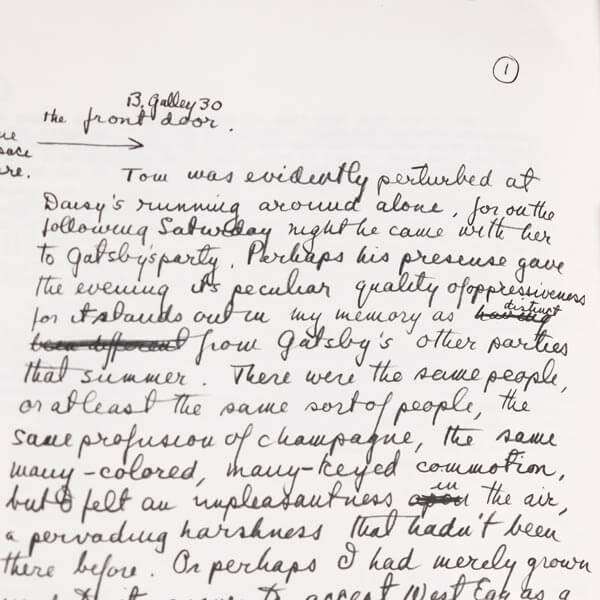
The Great Gatsby didn’t roll out perfect. Early drafts had events in a different order, and Gatsby’s motivations were murky until Fitzgerald revised heavily to sharpen the story.
These authors didn’t nail it on the first try. Their drafts were raw, flawed, and full of potential… just like yours.The difference is that they kept going.
First draft vs. final draft: What changes?
So, how does a messy first draft turn into a book you can’t put down? It’s all about the revisions. Here’s how first drafts evolve:
- Plot makeovers: Whole storylines might shift. You could toss in a new twist, cut a boring chapter, or rearrange scenes to keep readers hooked.
- Smoother words: Clunky dialogue gets snappy. Boring descriptions turn vivid. Extra words like “very” or “really” get the boot. Hemingway, for example, was a pro at trimming his sentences to make them punchy.
- Bigger, bolder characters and themes: Early drafts might have flat characters. With revisions, their voices pop, their goals make sense, and the story’s big ideas shine through.
Every draft is a step closer to the story you want to tell. You start with a rough sketch and keep adding color until it’s a masterpiece.
How to nail your first draft (without losing your mind)
Ready to tackle your first draft? Here’s how to keep the momentum going:
- Set a word goal: Try for 500-1000 words a day, even if they’re a bit rough. It’s about progress, not perfection.
- Use placeholders: Stuck on a scene? Jot down “[insert awesome fight scene later]” and keep moving. Don’t let one tricky bit derail you.
- Don’t look back: Reading and editing as you go can slow you down. Focus on finishing the draft first, even if it’s a mess.
- Embrace the chaos: Bad sentences? Giant plot holes? They’re proof you’re creating something. You’ll polish it up later.

Here’s a fun way to think about it: imagine your favorite book. Now picture its first draft: full of typos, half-baked ideas, and weird detours. That’s how it started, and it still became a hit. Your story can do the same.
Why rewriting is where the magic happens
Here’s the truth: your first draft isn’t the story. It’s the raw material. The real magic happens when you start revising. Most books go through a few rounds:
- First draft: Figure out the story. Get the rough shape down.
- Second draft: Fix the big stuff. Patch those plot holes and shuffle scenes.
- Third draft: Make the words sing. Sharpen dialogue and paint vivid pictures.
- Later drafts: Keep tweaking until it feels just right.
Some writers need five drafts, others need a dozen. The point is to keep going. Each revision makes your story stronger and closer to what you imagined.
Your big takeaway: Progress beats perfection
Stop chasing a perfect first draft. It’s a myth. Focus on getting words down, even if they’re messy. Every book you love started as a draft just as wonky as yours. The authors who make it are the ones who don’t give up. They write, rewrite, and keep tweaking until their story shines.
So, grab your laptop or a beat-up notebook. Write fast, write messy, and have fun with it. Your first draft might be a wild, bumpy ride, but it’s the start of something awesome. You’ve got this. Now go make a glorious mess.